STAB Research Group
The Space-Time Analysis Bayes (STAB) research group at the University of Washington.
Home
Jon Wakefield taught a class in Spatial Methods for Epidemiology at UW in 2006, and this lead to being on many PhD committees of students working on spatial health research, and these students have also been part of STAB, from a range of departments other than Statistics and Biostatistics including Epidemiology, Global Health, Sociology, Health Metrics Sciences and Geography. Jon's current and former students can be seen on the People page. Geir-Arne Fuglstad and Andrea Riebler from the Department of Mathematical Sciences at the Norwegian University of Science and Technology came on sabbatical to UW in 2017-2018, and this has led to a long and enjoyable collaboration. The STAB Lab meets once a week and we have external speakers, usually over zoom, plus talks from group members. We discuss papers, and once every few weeks go around the group giving updates on our projects. We have an emphasis on spatial and spatio-temporal in a low- and middle-income countries (LMICs) context. The methods that group members develop are designed to be used by researchers in LMICs on their own data, and to this end we emphasize efficient methods and user-friendly software.
We try to have as varied (in every sense) a group as possible and have an informal atmosphere in which everyone feels welcome and comfortable participating.
About Us
Jon Wakefield started working on space-time smoothing methods for survey data around 2008, when the Washington State Department of Health asked for help analyzing Behavioral Risk Factor Surveillance System (BRFSS) data. Previously, he had been at Imperial College in London, first in the Department of Mathematics and then the Department of Epidemiology and Public Health where from 1996, he led the statistics group at the Small Area Health Statistics Unit whose remit was to analyze health statistics in the UK at a small geographic scale, with an emphasis on cancer and heart disease. During this time (1996-1999) he was involved in developing models for disease mapping, cluster detection and spatial regression, in particular working on ecological bias. Moving to UW in 1999, he worked in space-time modeling of infectious disease data. Then, in 2013, one of his PhD students, Laina Mercer started working on space-time models for the under-5 mortality rate (U5MR) subnational estimation in Tanzania, based on household survey data.
Jon, Laina, Richard Zehang Li (who was at that point completing a PhD in the Department of Statistics at UW) and Jessica Godwin started a working group in around 2017, and this became the Space Time Analysis Bayes (STAB) group a couple of years later. Richard, Jon and Sam Clark (at the time a professor in the Department of Sociology at UW), along with Yuan Hsiao, Jessica Godwin and Bryan Martin, produced admin-1 estimates of U5MR across 35 sub-Saharan African countries. Around 2016, Jon started presenting on methods for subnational child mortality estimates at the United Nations (UN) Inter-agency Group for Mortality Estimation (IGME). The group produced the official UN IGME subnational under-5 and neonatal mortality risks in 2021 and 2023. The STAB Lab produced these estimates, with Alana McGovern and Jessica Godwin taking the lead. Jon works a lot with the UN and the World Health Organization (WHO). Victoria Knutson and Jon lead the methodological developments and Victoria did the analyses that produced the WHO excess mortality estimates during the COVID-19 pandemic.
People
Principal Investigator
-
 Professor of Statistics and Biostatistics, University of Washington
Our Team
-
 Professor of Statistics, Department of Mathematical Sciences, Norwegian University of Science and TechnologySpatial and spatio-temporal statistics, SPDE models, non-stationary modelling, computational statistics, and spatio-temporal estimation of demographic and health indicators
 -
 Post doc in Statistics, University of WashingtonBayesian inference, demography, global health, mortality modeling
 -
 PhD Student in Statistics, University of WashingtonSmall area estimation, Bayesian inference, spatial modeling, public health
 -
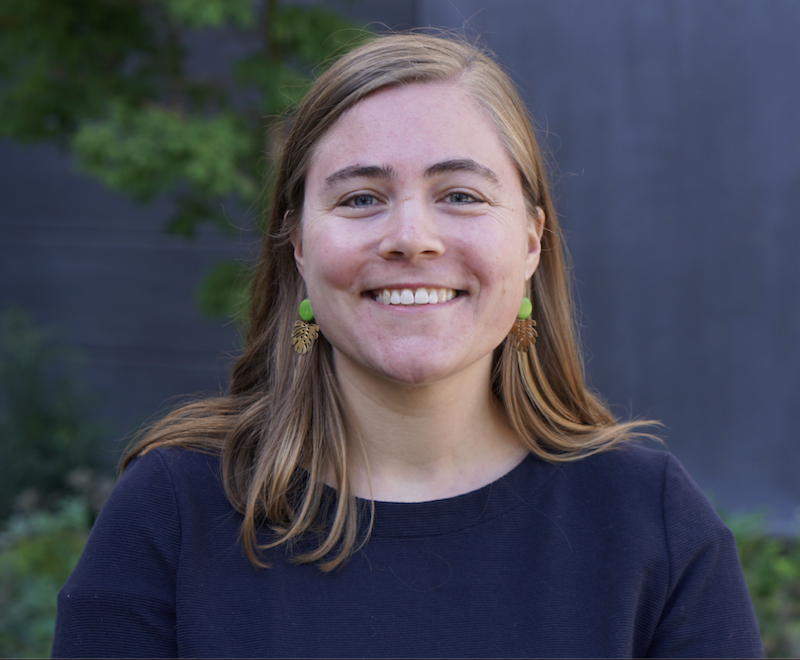 Katie PaulsonPhD Student in Biostatistics, University of WashingtonStatistical demography, survival analysis, spatial epidemiology
 -
 PhD Student in Biostatistics, University of WashingtonCorrelated data, small sample size problems, spatiotemporal modelling, demography
 -
 Zihang YuMasters Student in Biostatistics, University of WashingtonStreamlined pipeline for analysis of MICS surveys
Schedule
The STAB research group meets weekly at the Hans Rosling Center for Population Health and on Zoom. We use this time to update each other regarding our research progress, as well as invite presenters who work in research areas including spatial demography, survey statistics and methodology, and Bayesian modeling and computation.
Meeting times vary each academic quarter based on members' availability. In the Spring 2026 quarter, meetings are held on Tuesdays 12pm–1pm PST.
Autumn Quarter, 2026
| Date | Presenter | Affiliation | Topic |
|---|---|---|---|
| 10/05 | Jon Wakefield | UBC | STAB and sae4health research overview and updates |
| 10/12 | Lucia Hug | UN-IGME | UN-IGME U5MR methodology updates |
| 10/19 | Serge Aleshin-Guendel | US Census Bureau | SAE work at the Center for Statistical Research and Methodology at the United States Census Bureau |
| 10/26 | Paul Andres Corral Rodas | World Bank | SAE and survey-to-survey prediction at the World Bank |
| 11/02 | None | STAB group updates | |
| 11/09 | Nazim Gashi | UNICEF | Work being done under MICS GIS |
| 11/16 | Emily Berg | Iowa State University | SAE methodology work and combining probability/non-probability samples |
Spring Quarter, 2026
| Date | Presenter | Affiliation | Topic |
|---|---|---|---|
| 3/31 | Jose Fernando Matta Chuquisapon | University of San Marcos | Mapping subnational socioeconomic indicators and malaria risk in highly dispersed regions using small area estimation |
| 4/14 | Qianyu Dong | UC Santa Cruz | On cross-validation for small area estimators |
| 4/21 | Sho Kawano | UC Santa Cruz | On Data Thinning for Model Validation in Small Area Estimation |
| 4/28 | Jon Wakefield | UW, Departments of Statistics & Biostatistics | Discussion of "The Two Cultures of Prevalence Mapping: Small Area Estimation and Model-Based Geostatistics" |
| 5/5 | Adrien Allorant | University of Southampton | A data-integration framework for subnational HIV surveillance: statistical calibration of routine facility testing using probability-survey biomarkers |
| 5/12 | Willow Crawford-Crudell | UW, Biostatistics | Identifying radio signals in Mozambique with highest burden of select child and maternal health outcomes using DHS data |
| 5/19 | Bumjun Park | UW, Biostatistics | Estimating Under-5 Mortality in LMICs: An Alternative to the Log-Quadratic Model |
| 5/26 | Ameer Dharamshi | UW, Biostatistics | Conformal prediction for mapping sustainable development indicators with complex survey data |
| 6/2 | Geir-Arne Fuglstad | Norwegian University of Science and Technology | Geostatistical Spatio-Temporal Modelling: An introduction and recent work |
Winter Quarter, 2026
| Date | Presenter | Affiliation | Topic |
|---|---|---|---|
| 1/13 | Jon Wakefield | UW, Departments of Statistics & Biostatistics | Goals for 2026 |
| 1/20 | David Coomes | UW, Department of Epidemiology | The role of migration in rural-urban population-level mortality disparities in the US |
| 1/27 | Jonas Schöley | Max Planck Institute for Demographic Research | Confronting the possibility of catastrophe: Identification, characterization, and simulation of mortality shocks via Hidden Markov Lee-Carter models |
| 2/3 | Katie Paulson | UW, Department of Biostatistics | Multiple topics related to national and small area estimation of child mortality rates |
| 2/10 | David Coomes | UW, Department of Epidemiology | The association of wildfire air pollution and emergency room department visits 2018-2023 |
| 2/24 | Peter Gao | San José State University | Introduction to pseudobayes |
| 3/3 | Emanuele Giorgi | University of Birmingham | A decay-adjusted spatio-temporal model to account for the impact of mass drug administration on neglected tropical disease prevalence |
| 3/10 | Ameer Dharamshi | UW, Department of Biostatistics | Estimating Residential Displacement in the Central Puget Sound Region using Household Survey Data |
| 3/24 | Silvia De Nicolò | University of Bologna | Mapping poverty and inequality at fine geographical scales |
Autumn Quarter, 2025
| Date | Presenter | Affiliation | Topic |
|---|---|---|---|
| 9/30 | Jon Wakefield | UW, Departments of Statistics & Biostatistics | The two cultures for prevalence mapping: small area estimation and spatial statistics |
| 10/7 | Richard Li | UC Santa Cruz | SAE Software |
| 10/14 | Jon Wakefield | UW, Departments of Statistics & Biostatistics | Automatic Variance Adjustment for Fay-Herriot Modeling |
| 10/21 | Abhi Datta | JHU, Department of Biostatistics | Machine learning for geospatial data with explicit modeling of spatial correlations |
| 11/4 | David Haziza | University of Ottawa, Department of Mathematics and Statistics | A Debiased Machine Learning Single-Imputation Framework for Item Nonresponse in Surveys |
| 11/25 | Laina Mercer | Fred Hutchinson Cancer Center | Polio mapping in low- and middle-income countries |
| 12/2 | Victoria Knutson | UW, Department of Biostatistics | Death distribution methods |
| 12/9 | Alana McGovern | UW, Department of Statistics | Variance smoothing in Fay Herriot models for small area means |
Spring Quarter, 2025
| Date | Presenter | Affiliation | Topic |
|---|---|---|---|
| 4/1 | Alex Ziyu Jiang | UW, Department of Statistics | BARTSIMP: flexible spatial covariate modeling and prediction using Bayesian additive regression trees |
| 4/8 | Haoyi Chen | UN, Statistics Division | Geospatial SAE |
| 4/22 | Nathanial Henry | Henry Spatial Analysis | Model-based geostatistics (MBG) package |
| 4/29 | Gauri Datta | University of Georgia | Application of credible regions for ranks of subpopulations |
| 5/6 | Carolina Franco | NORC at University of Chicago | |
| 5/20 | Peter Hoff | Duke University | FAB intervals |
| 5/27 | Paul Smith and Nikos Tzavidis | University of Southampton | Alternatives to evaluating small area estimates with direct estimates |
Winter Quarter, 2025
| Date | Presenter | Affiliation | Topic |
|---|---|---|---|
| 1/21 | Peter Diggle | Lancaster University | Spatio-temporal point processes |
| 2/4 | David Newhouse | World Bank | Poverty mapping |
| 2/11 | Herb Susmann & Leontine Alkema | NYU & UMass Amherst | Modeling shocks to demographic and health indicators |
| 2/25 | Jessica Godwin | UW, Center for Studies in Demography and Ecology | Excess Mortality in Puerto Rico following Hurricane María |
| 3/4 | Ameer Dharamshi | UW, Department of Biostatistics | Exact variance estimation for model-assisted survey estimators using U- and V-statistics |
Fall Quarter, 2024
| Date | Presenter | Affiliation | Topic |
|---|---|---|---|
| 10/1 | Geir-Arne Fuglstad | Norwegian University of Science and Technology | Addressing Positional Anonymisation in Geostatistical Analyses of DHS Data |
| 10/8 | Ezra Gayawan | Federal University of Technology | An assessment of the impact of women's empowerment on childhood vaccination coverage in Nigeria: a spatio-temporal analysis |
| 10/29 | Brian Njuguna | CEMA at University of Nairobi | SAE for soil-transmitted helminthiases |
| 11/5 | Katie Paulson | UW, Department of Biostatistics | Review of penalized complexity priors and scaling for IGMRFs |
| 11/12 | Richard Li | UC Santa Cruz | Methods for SAE model comparison |
| 11/26 | Janet van Niekerk | King Abdullah University of Science and Technology | Computation in the INLA package |
Spring Quarter, 2024
| Date | Presenter | Affiliation | Topic |
|---|---|---|---|
| 3/26 | Jim Thorson | NOAA Fisheries | Dynamic structural equation models: expressive specification for multivariate time-series and spatio-temporal models |
| 4/2 | Laura Dwyer-Lindgren | UW, Institute for Health Metrics and Evaluation | US Health Disparities Project |
| 4/9 | Mark Wheldon | United Nations | World Population Prospects: A Quick Tour of Probabilistic Methods |
| 4/30 | Yajuan Si | University of Michigan | On the Use of Auxiliary Variables in Multilevel Regression and Poststratification |
| 5/7 | Yunhan Wu | UW, Department of Biostatistics | Empowering LMIC Health Decision-Making: A Shiny App for Streamlined Prevalence Mapping with SurveyPrev |
| 5/21 | Spencer Pease | UW, Institute for Health Metrics and Evaluation | An introduction to the methodology used to estimate population, based off of the original popReconstuct model developed by Mark Wheldon et al. |
| 5/28 | Edson Utazi | University of Southampton | Bayesian hierarchical modelling approaches for combining information from multiple data sources to produce annual estimates of national immunization coverage |
| 6/4 | Cory Arrouzet | UW, Department of Epidemiology | Investigating the associations of Quilombola land control on arboviral diseases in Brazil using spatial regression and mathematical modeling |
Winter Quarter, 2024
| Date | Presenter | Affiliation | Topic |
|---|---|---|---|
| 1/16 | David Coomes | UW, Department of Epidemiology | Rural mortality and migration in the US |
| 1/30 | Peter Macharia | Institute of Tropical Medicine, Antwerp | |
| 2/13 | Andreea L. Erciulescu | Westat | An overview of small area estimation with recent projects examples |
| 3/5 | Thomas Lumley | University of Auckland | survey R package |
Blog
Recent updates from the STAB research group.
2026
Alana McGovern passes her general exam!
February 25, 2026
Congratulations Alana!
New preprint by Wakefield, Jiang, and Wu
February 16, 2026
Automatic Variance Adjustment for Small Area Estimation (Wakefield, Jiang, and Wu) is now available: Link.
New preprint by Paulson, Okonek, and Wakefield
January 28, 2026
A Survival Framework for Estimating Child Mortality Rates using Multiple Data Types (Paulson, Okonek, and Wakefield) is now available: Link.
2025
Wu et al. to appear in Annals of Applied Statistics
December 23, 2025
Small Area Estimation of Education Levels in Low- and Middle-Income Countries (Wu, Dharamshi, and Wakefield) to appear in Annals of Applied Statistics. Link.
Paulson et al. to appear in Annals of Applied Statistics
Temporal Models for Estimation and Short-Term Forecasting of Neonatal Mortality Rates in Sub-Saharan Africa (Paulson, Fuglstad, Li, and Wakefield) to appear in Annals of Applied Statistics. Link.
Victoria Knutson passes her final exam!
December 5, 2025
Congratulations Victoria! She will next be doing a postdoc with Jon on the Gates SAE project.

Ameer presents at the NUS-IMS Young Mathematical Scientists Forum in Singapore
November 28, 2025
New preprint by Schumacher and Wakefield
November 19, 2025
Small Area Estimation Methods for Multivariate Health and Demographic Outcomes using Complex Survey Data (Schumacher and Wakefield) is now available: Link.
Okonek et al. published in Demographic Research
October 28, 2025
A parametric survival model for child mortality using complex survey data (Okonek, Wilson, and Wakefield) published in Demographic Research. Link.
Jiang and Wakefield published in Spatial and Spatio-temporal Epidemiology
October 8, 2025
BARTSIMP: Flexible spatial covariate modeling and prediction using Bayesian additive regression trees (Jiang and Wakefield) published in Spatial and Spatio-temporal Epidemiology. Link.
Katie Paulson passes her general exam!
September 23, 2025
Congratulations Katie!
New preprint by Vasconcelos et al.
Accounting for Spatial Correlation in Graphical Analysis of Spatial Transcriptomics Data (Vasconcelos, Danaher, McGuire, Wakefield, and Shojaie) is now available. Link.
Alana and Ameer present at the International Population Conference in Brisbane, Australia
July 13-18, 2025
Jon presents at the Small Area Estimation conference in Turin, Italy
July 9, 2025
Talk title: "The Two Cultures of Prevalence Mapping: Small Area Estimation and Model-Based Geostatistics"
New preprint by Wu and Wakefield
July 4, 2025
Small Area Estimation of Fertility in Low- and Middle-Income Countries (Wu and Wakefield) is now available. Link.
Jon awarded a two-year grant by the Gates Foundation!
July 2025
The grant, titled "Multi Indicator Small Area Estimation Resource", will fund the development of methods and software for small-area estimation in low- and middle-income countries. The first version of the deliverables are available at: Link.
Jon gives the CRiSM colloqium talk at the University of Warwick
May 29, 2025
Details of his talk, "Small Area Estimation in Low- and Middle-Income Countries" are available here: Link.
New preprint by Wu et al.
May 1, 2025
sae4health: An R Shiny Application for Small Area Estimation in Low- and Middle-Income Countries (Wu, Dong, Xu, Li, and Wakefield) is now available. Link.
Ameer Dharamshi passes his general exam!
April 29, 2025
Congratulations Ameer!
Amouzou et al. published in The Lancet
The 2025 report of the Lancet Countdown to 2030 for women's, children's, and adolescents' health: tracking progress on health and nutrition (Amouzou, ..., Wakefield, ..., Boerma) published in The Lancet. Link.
New preprint by Dong et al.
April 23, 2025
Toward a Principled Workflow for Prevalence Mapping Using Household Survey Data (Dong, Wu, Li, and Wakefield) is now available: Link.
New preprint by Sutton et al.
March 7, 2025
Evaluating Multilevel Regression and Poststratification with Spatial Priors with a Big Data Behavioural Survey (Sutton, Almquist, and Wakefield) is now available: Link.
Yunhan Wu passes his final exam!
March 4, 2025
Congratulations Yunhan! He will next be doing a postdoc at Oak Ridge National Laboratories.
Li et al. published in The R Journal
Space-Time Smoothing of Survey Outcomes using the R Package SUMMER (Li, Martin, Dong, Fuglstad, Godwin, Paige, Riebler, Clark, and Wakefield) published in The R Journal. Link.
New preprint by Dharamshi et al.
February 16, 2025
Exact variance estimation for model-assisted survey estimators using U- and V-statistics (Dharamshi, Gao, and Wakefield) is now available. Link.
New preprint by Wu et al.
February 11, 2025
Small Area Estimation of Education Levels in Low- and Middle-Income Countries (Wu, Dharamshi, and Wakefield) is now available. Link.
Gascoigne et al. published in Spatial and Spatio-temporal Epidemiology
February 1, 2025
Estimating subnational under-five mortality rates using a spatio-temporal Age-Period-Cohort model (Gascoigne, Smith, Paige, and Wakefield) published in Spatial and Spatio-temporal Epidemiology. Link.
Wakefield and Knutson published in Annual Review of Statistics and its Application
Excess mortality estimation (Wakefield and Knutson) published in Annual Review of Statistics and its Application. Link.